All Work

FlyKind

UX Case Study

FlyKind is a mobile-first ecommerce platform for sustainable fashion that uses material from upcycled parachutes. I designed the shopping experience by storytelling and a batch-based system that also supports marketing and production.

28% increase in add-to-cart rate by improving product clarity and storytelling

40% faster checkout with a simplified, mobile-first purchase flow

Stronger trust and understanding of upcycled materials across all tested users

UX/UI Design E-Commerce Product System Storytelling

Shoppers lacked trust and clarity when buying products made from unfamiliar upcycled materials,

while the business also needed a clearer way to manage limited inventory and communicate availability.

What needed to be solved

Create a shopping experience that makes unfamiliar upcycled products easier to understand, more trustworthy, and more compelling to buy, while supporting the business's need for clearer inventory communication and production planning.


To solve this, I introduced a batch model as the core structure behind the experience—helping the site better support how the product was made, sold, and communicated.

Built trust through storytelling

Built trust through storytelling around material origin and product uniqueness.

Simplified the mobile shopping flow

Simplified the mobile shopping flow so users can move faster and with more confidence.

Introduced a batch-based system

Introduced a batch-based system to clearly show product availability and connect inventory, marketing, and production.


Parachute Material Internal Material Calculation Used to plan batch availability Batch Opens Customers can order custom-made products Each order subtracts material by product & size Live Batch Progress Shows batch status and what is available now Auto-Close When Batch Is Full or when the batch period ends Batch Closed Tag Lottery One order receives the original parachute tag Production Starts All custom-made items move into production

Batch System

I used the limited parachute material as part of the experience. The batch-based system made availability clearer for shoppers and helped the business manage inventory, marketing, and production. Original tags and markings also became part of the story, with a lottery-style feature that made some pieces feel even more special.

How it works

  1. Each parachute defines a limited batch based on the total material available, with multiple product types drawing from the same shared material pool

  2. Batch progress updates in real time so shoppers know what they can still order, and the batch closes when capacity is reached or the order window ends

  3. Once the batch closes, production begins

  4. Some stock items are created from buffer or leftover material combined across batches, reducing waste while enabling a small number of ready-to-ship pieces

  5. One piece in each batch includes the original parachute tag, adding rarity and creating a storytelling moment

Building Trust Through a More Transparent Product Experience

Shoppers loved the idea of upcycled parachute products, but they needed more clarity to feel confident buying them. I redesigned the listing experience to make each product feel more real, easier to understand, and easier to compare, while also helping the business communicate limited inventory more clearly.

Initial listing

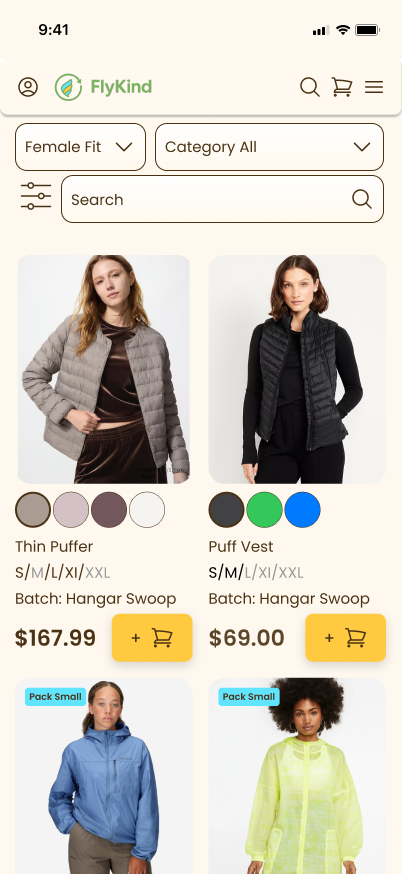
FlyKind product listing showing individual items with color swatches, batch name, and pricing

Research-refined listing

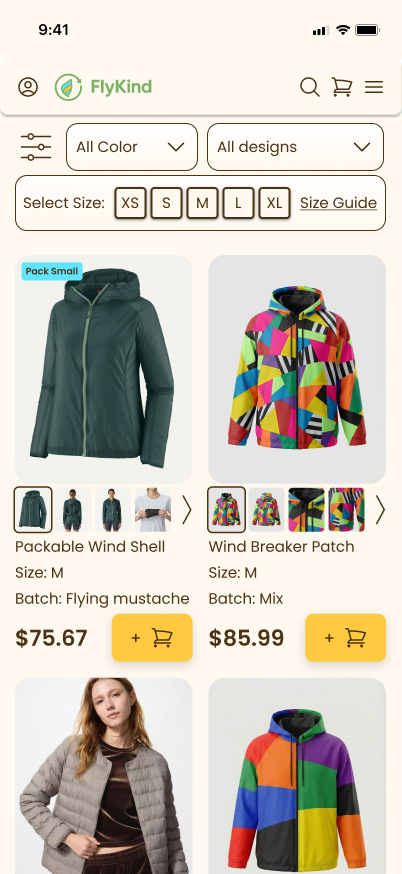
FlyKind product listing with size filter, multiple product images, and batch labels
  1. Made each piece feel distinct. Instead of grouped listings, I used individual product listings so shoppers could see the real differences created by each parachute cut.

  2. Focused on what shoppers looked for first. Research showed that photo, price, and size/fit mattered most early on, so those details were prioritized in the browsing experience.

  3. Reduced hidden information. Instead of swipe-only galleries, I used thumbnails so key details like material and variation were easier to see at a glance.

  4. Improved clarity around availability. Size filters and a clearer listing structure made products easier to compare and helped the business communicate limited inventory more honestly.

Using Storytelling to Make the Product Easier to Understand

FlyKind's upcycled materials needed more context to feel clear and trustworthy. I used storytelling to bring the material's origin and transformation into the shopping experience.

Custom made

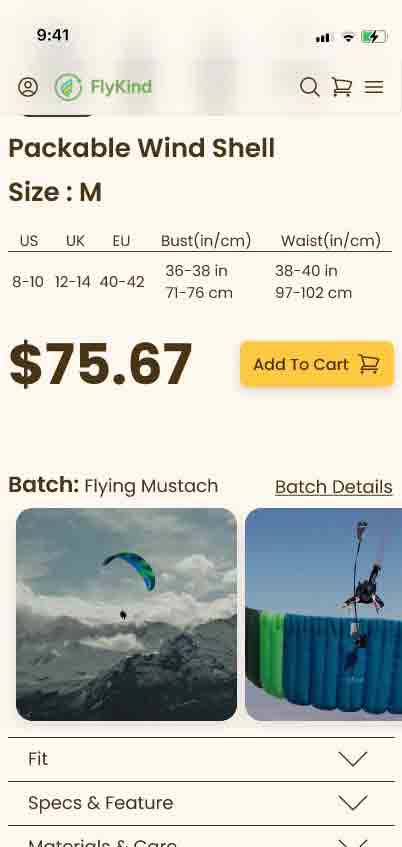
Product detail page showing batch name, parachute source imagery, and expandable specs

Standard product

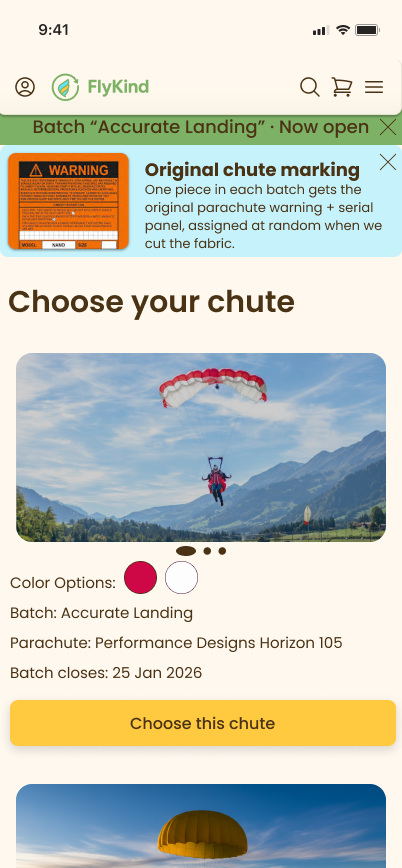
Choose your chute screen showing parachute selection with batch details and closing date
  1. Integrated the parachute's story into the shopping experience through batch details, source imagery, and before-to-after context

  2. Showed the making process as part of the story so shoppers could better understand what made each piece unique

  3. Carried that storytelling across both custom-made and standard product flows to create a clearer, more meaningful, and more trustworthy experience

Guiding Users Through Checkout

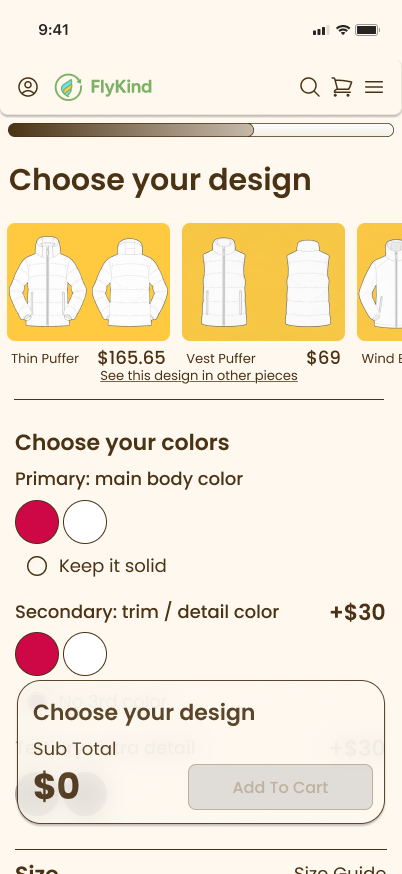
To I designed the checkout flow to be easier to follow. Keeping guidance and pricing visible helped shoppers understand the process and cost without losing momentum.

  1. Sticky total — kept pricing and checkout visible

  2. Sticky instruction — clarified the batch process at key moments

  3. Add-on pricing — used a familiar "pizza menu" pattern to make extras and their costs easier to understand

  4. Progress bar — made the flow feel easier to follow

Product customization flow with sticky instruction bar showing subtotal and next step

Clarity drove conversion.

Prototype testing with five participants — including two returning FlyKind customers and three new users recruited for the study — showed measurable improvement across every key metric.

28%

Increase in add-to-cart rate in prototype testing vs. original flow

5/5

Participants understood the material origin story without prompting

40%

Reduction in checkout task completion time vs. existing experience

FlyKind reminded me that even though e-commerce has many best practices, no pattern is truly one size fits all. The brand's one-of-a-kind materials and batch-based model created trust questions that standard shopping flows could not fully solve. Doing FlyKind-specific research made those needs visible early, so the experience could be shaped around real expectations instead of assumptions.

It also reminded me why UX/UI matters. Design helps connect the reality of a business to an experience that feels clear, honest, and trustworthy for the customer. When research shapes the structure, language, and interactions, the product does not just look better — it works better for both the user and the brand.
← Previous case study

TiriVelo

Provider experience for a pet care marketplace

View TiriVelo

Next case study →

ThaiTongue

Structured tone-learning for Thai language learners

View Thai Tongue